
BUYER'S COURSE
Here's What You Need to Know About Buying a Home in the Arizona

BUYER'S COURSE
Here's What You Need to Know About Buying a Home in the Arizona

|
|
|
Buyer's Course
Buyers Blueprint Intro
Module 1: You Need An Expert
Module 2: Buyer's Compensation
Module 3: Choosing the Right Lender
Module 4: Making an Offer and Negotiations
Module 5: Your Offer Is Accepted
Module 6: Inspections Are Complete
Module 7: The Final Steps
Module 8: Erin Brockovich Buyer Compensation
Nestled in the vibrant heart of Arizona offers an unparalleled blend of serene suburban living and the convenience of city life.
Whether you're a first-time buyer or looking to upgrade your living situation, our tailored market updates, captivating community videos, and comprehensive real estate insights make your home-buying journey seamless and enjoyable.
Exclusive Market Updates
Stay ahead of the curve with our up-to-minute market updates. From the latest listings to price trends, we ensure you have all the information you need to make informed decisions. Arizona's real estate landscape is dynamic, and with our expert analysis, you're always in the know.
Want to be sure you don't miss out on any local tips & local real estate market updates?
Have them delivered to your inbox.
Subscribe to the monthly digital newsletter below!
market Updates

Considering Buying?
Buying a home can be an exciting but also challenging experience. If you're planning to buy an East Bay home, it's important to be prepared and aware of what to expect throughout the process. This short guide is designed to provide buyers like you with valuable insights and tips to navigate the purchase of your East Bay property successfully.
DOWNLOAD TO ACCESS:
Home Buyers Blueprint
Step by Step Process to Buying A Home

Spring is here!
The Spring Real Estate Market is thriving, and we are seeing a significant increase in demand for homes in Voorhees, especially from millennials.
In fact, the current absorption rate in our area is only 3 months, which means that if no more homes come on the market, we will only be able to sustain the current demand for up to 3 months.
This is great news for anyone considering selling their home, as the high demand can lead to a boost in your bottom line.
If you are thinking about selling your home, now is the perfect time to do so. To get started, it's essential to focus on your curb appeal, which can significantly impact the value of your property. That's why we've put together a helpful checklist to help you get started.
Friendly reminder: Before you make a repair, be sure to check with a real estate agent to make sure it is worth your return on investment. Feel free to Book A Call with me if you have any questions or want a free consultation!
Are you a little behind on your spring cleaning? Grab a copy of the Ultimate Spring Cleaning Checklist that was featured last month.
Preparing for a possible move this winter? Click below to check out our moving checklist to get your whole house ready for the next home!
Want to know what is happening throughout East Bay Now?
Click below for a full live schedule of local events around town!

ARIZONA STATS & LOCAL INFO
Click Here for the Census Data.
Click Here for the Arizona Report Card from Niche.
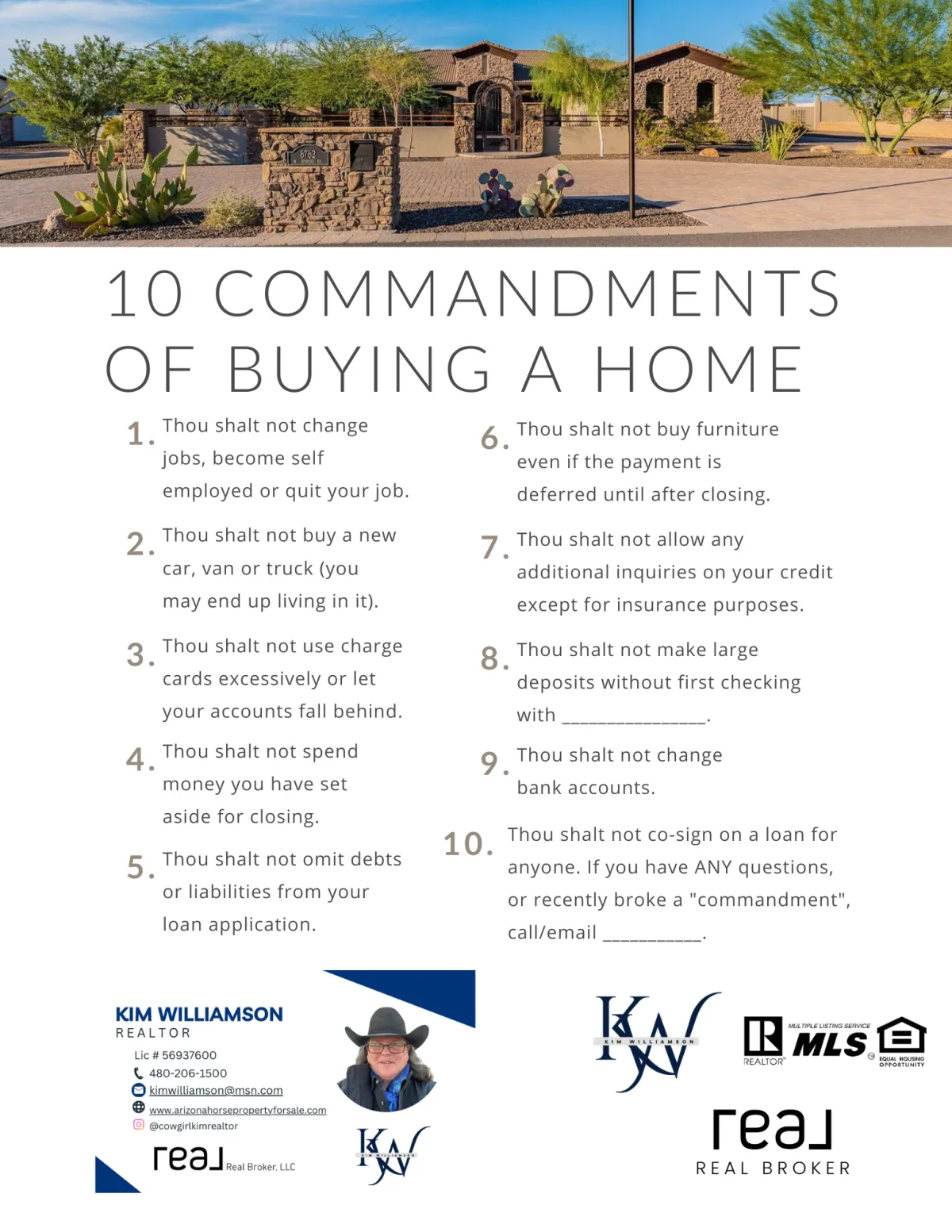
DOWNLOAD TO ACCESS:
10 Commandments of Buying A Home

DOWNLOAD TO ACCESS:
The Complete Guide to Buying A Home
market Updates
buying new construction? buyer beware
Local market update
NAR's Commission Settlement:
Understanding Buyer's Agent Compensation
National Market Update
Buyer Tips
Community Videos
3 best sandwich Shops
Best Burrito in Brentwood
Best Hot Dogs in Brentwood
MJ's Cafe in brentwood
WELCOME TO THE VIRTUAL Home Buyer SEMINAR IN ARIZONA
If you're either thinking about purchasing a new home or already made the decision to purchase a house, but you still have questions or concerns regarding the process, price or anything else - let me tell you:
You're in the right place.
This free home buyer seminar is giving you the exact step by step blueprint on everything you need so you can get clarity on everything A-Z and guide to you make the best decision in purchasing your new home.
You will learn about timelines and timing, inspections, loan pre-approvals, negotiations, and so much more.
Take a look around and let us know how we can help you.
Kim Williamson | Realtor & Broker
By Real Brokerage
SA # 569376000
WELCOME TO THE VIRTUAL HOME BUYER SEMINAR LIBRARY
Enjoy the latest & most up-to-date marketing & sales tactics to help you purchase a NEW home.
Thinking About Buying?
Are you thinking about buying a home but you don't know where to start?
Learn to take advantage of Tax Saving opportunities instead of throwing your money away
Walk through the important aspects of purchasing a home
What to Expect When Buying a Home
Purchasing a home is most likely going to be one of the largest investments you will make in your lifetime.
We have helped hundreds of clients in the past and we can help you too
My team and I are free! The seller pays for our fees and they have an agent who has their best interest at heart. We are here to have yours
Home Buying Process -
First Step
The first step when looking to buy a home is getting qualified for a loan.
Before doing anything else you need to know what you can afford by getting qualified for a loan
Don’t go house hunting before going mortgage shopping
Pre-Approval vs
Pre-Qualification
Why you need an approval rather than just a pre-qualification.
Pre-Qualification is not a true approval but the initial step in a home loan process where you discuss your financial situation with a loan officer - nothing is verified
Pre- Approval is where the buyer provides the lender with the necessary documents to tell them what they are approved for, which loan option is the best for them and what the interest rate will be
10 Must Not’s When Buying a Home
Once you find your dream home, we need to make sure you get to move into it.
Don’t change jobs; becoming self employed or quit current job
Don’t buy a vehicles
Don’t use any charged cards or let your accounts fall behind
Don’t spend money you saved for closing
Don’t omit any debt or liabilities from your loan application
What are the Pros and Cons of Purchasing a Home?
Whether you’ve never owned a home before or it’s been a while since you’ve purchased, let's talk about the pros and cons.
Pro: Your wealth can increase as you build equity in your home through 2023 averaging about 3%
Con: Maintenance costs; work and money to keep a home in good condition
How Much Money Do I Need To Purchase a New Home?
Most people are afraid that it will cost them thousands and thousands of dollars to purchase a home in Brentwood.
There are various loans and grants to qualify to purchase a home
3 Tips To Get Your Offer Accepted
Are you competing with other buyers on your dream home or do you want to make sure you’ve got the best chance of getting your offer accepted?
Make sure you offered a competitive price on a home
Put down a larger earnest money deposit
Let the seller know that you have not written offers on any other properties
Offer Has Been Accepted, What’s Next?
Once your offer has been accepted, it's time to open up escrow.
It's time to get inspections done on the home, review disclosures, secure the loan, and get the appraisal done
WANT TO GET A FREE CUSTOM MARKET PROPOSAL?
Go to the next page to request a custom market proposal for your specific home
Community Videos
Let's Get You Prepared To Buy A Home
Kim Williamson | Realtor & Broker
SA # 569376000
Meet Kim Williamson
Graduated from Farmington, NM High School. Competed in basketball, track, softball, and rodeo. I qualified in High School for the National Finals Rodeo my freshman, sophomore ,junior, and senior years.
Received a Bachelor’s Degree in Business Operations with a minor in Accounting from DeVry University.
Worked for 3 major logistics companies before I started my own delivery business, which I built to be one of the largest minority own companies in Arizona. In turn, I SOLD it for a very large profit.
My love for horses and rodeo will always be in my heart. After selling my company, I started training horses full time and rodeoing again. In the process of my new career, I also earned my Real Estate License. My western lifestyle went hand and hand with my knowledge of Real Estate. There was a true need for an experienced Realtor that understood land and horse properties. With that being said, I was able to win 8 World Championships in the Women’s Pro Rodeo Association Roping Division. I broke numerous arena records and become one of the elite cowgirls in the world. I hosted 20-30 roping schools across the world annually. As for my Real Estate career, it soared as well, being ranked in the top 200 Top Producing agents out of 90,000 in the State of Arizona. I absolutely love helping others and I constantly strive to improve myself with coaching and mentorship as well as giving back.
KNOWLEGDE IS POWER. “Do what you love and love what you do.”
SUPPORT OUR SMALL BUSINESSES
Top 5 Things To Do In Brentwood
Top Tacos in Brentwood
41 Sand Creek Rd C, Brentwood
335 Oak St, Brentwood
Visit our blogs for more real estate tips, home tips, and local information!
Unpermitted Barns on Arizona Horse Property
Unpermitted Barns on Arizona Horse Property
Unpermitted barns on Arizona horse property cost people deals every month, and the maddening part is that a lot of those barns were never required to have a permit in the first place. The seller says there is no permit. The buyer hears the word unpermitted, pictures a bulldozer and a lawsuit, and walks. Nobody in the room knows which of those two situations they are actually in.
There is a real difference between a structure that was legally exempt and a structure that skipped a permit it needed. Knowing which one you are looking at is worth real money on both sides of the table.
Why are so many Arizona barns unpermitted?
Because Arizona statute carves out agricultural construction from county building code requirements.
A.R.S. 11-865 is titled "Exemptions; exception." The statute exempts construction, and operation incidental to construction and repair, relating to irrigation and drainage ditches or appurtenances thereto of regularly constituted districts or reclamation districts, or to farming, dairying, agriculture, viticulture, horticulture or stock or poultry raising.
Stock raising is in that list. That is the reason a great many barns, loafing sheds, hay barns and working structures on Arizona acreage went up without a county building permit and were entirely proper.
The statute carries limits you should know. If the property owner wants to change the use of the property, the statute provides that the owner shall not implement a change endangering public health or safety. And the exemption does not reach everything: requirements still apply to activities involving changing, remanufacturing or treating human sewage or sludge for distribution or resale.
Two more things must be said clearly, because guessing here costs people money.
First, this is a county statute. Incorporated cities and towns run their own building codes and their own exemptions, and they are not obligated to mirror the county. A barn that needed nothing in unincorporated county may have needed a permit two miles away inside a town limit.
Second, exempt from a building permit is not the same as exempt from zoning, from setbacks, or from your septic and well rules. Different rulebooks, different offices.
If you want the full walkthrough of what does require a permit and where, start with barn, arena and outbuilding permits in Arizona.
Who decides whether your structure was exempt?
The building department with jurisdiction over that specific parcel. Nobody else.
Pinal County Building Safety, for example, states that it provides inspection, plan review and investigative services to the unincorporated areas of the county and also to those cities that have entered into intergovernmental agreements with the county to provide building code services. So even the boundary of who reviews what is not always the line on the map you would assume.
This is a phone call, not a guess. Call the building department for the jurisdiction the parcel sits in, give them the parcel number, and ask what is on record. That is the only answer worth relying on, and it is free.
What does this actually cost you at closing?
The permit question usually shows up as a financing and appraisal problem, not a code enforcement problem.
Here is the pattern I see. The barn is fine. The barn has been standing for eighteen years. But the appraiser has to decide what to do with a structure that has no permit history, and the lender has to decide whether the collateral supports the loan.
Fannie Mae's Selling Guide is more flexible on this than most people assume. It provides that loans secured by unique or nontraditional types of housing are eligible provided the appraiser has adequate information to develop a reliable opinion of market value. It states that it is not necessary for one or more of the comparable sales to be of the same design and appeal as the property being appraised. Where identical comparables are not available, the appraisal remains acceptable when the appraiser can determine sound adjustments for the differences between the comparables that are available and the subject property, and demonstrate the marketability of the property based on older comparable sales, comparable sales in competing neighborhoods, or the existence of similar properties in the market area.
The guide draws the line at the far end: a property becomes ineligible when the appraiser is not able to find any evidence of market acceptance, and the characteristics of the property are so significantly different that a reliable opinion of market value cannot be established.
Translated for horse property: the deal does not die because a barn lacks a permit. The deal dies when the appraiser cannot build a supportable case for value. Those are different problems, and the second one is the one to worry about.
This is closely related to why rural appraisals disappoint people generally, which we covered in why horse property appraisals come in low.
What sellers should do before listing
Get ahead of it. Every time.
Pull whatever permit history exists on the parcel before you list, not after an inspection objection. If a structure was built under the agricultural exemption, be able to say so plainly and point to why. If something genuinely skipped a permit that it needed, find that out on your own schedule and price or address it deliberately.
And disclose. Arizona sellers carry real disclosure obligations, and a known unpermitted addition is exactly the kind of item buyers and their attorneys look back at later. Our guide to what Arizona sellers must disclose when selling horse property covers the territory.
I will tell you honestly why I push sellers this hard on it. Roughly 82 percent of my business comes from referrals. That only happens when the people on both sides of a closing still feel good about it two years later. A surprise found in escrow is the fastest way to lose that.
What buyers should do
Three moves, in order.
Call the jurisdiction with the parcel number and ask what permits exist. Ask your lender early, in writing, how they handle outbuildings without permit history on acreage. And have a structural professional look at anything you are relying on, because the real question is not whether a barn has a piece of paper, it is whether it is sound, safe and will still be standing after a monsoon.
A barn with no permit and good bones is a negotiation. A barn with no permit and a sagging ridge beam is a different conversation entirely.
The bottom line
Do not let the word unpermitted end a good deal, and do not let it slide by unexamined either. On Arizona acreage, an unpermitted agricultural structure is often exactly what the statute contemplated. Find out which situation you are in, from the office that keeps the records, before anyone panics.
Frequently Asked Questions
Are barns exempt from building permits in Arizona? A.R.S. 11-865 exempts construction relating to farming, dairying, agriculture, viticulture, horticulture or stock or poultry raising from county building code requirements. Cities and towns set their own rules, so the answer depends on which jurisdiction the parcel sits in.
Does an unpermitted barn stop me from getting a loan? Not automatically. Fannie Mae's Selling Guide allows unique or nontraditional properties when the appraiser has adequate information to develop a reliable opinion of market value. Eligibility fails only when no evidence of market acceptance can be found.
Does the agricultural exemption cover septic and zoning too? No. A building permit exemption is not a zoning, setback, well or septic exemption. A.R.S. 11-865 also expressly keeps requirements in place for activities involving treating human sewage or sludge for distribution or resale.
How do I find out what permits exist on a property? Call the building department for the jurisdiction the parcel is in and give them the parcel number. In Pinal County, Building Safety serves unincorporated areas plus cities that have intergovernmental agreements with the county.
Do I have to disclose an unpermitted structure when I sell in Arizona? Arizona sellers have disclosure obligations, and a known unpermitted structure is the kind of material item that belongs on the disclosure. Handle it before listing rather than during escrow.
Sources (checked 2026-09-25): Arizona Revised Statutes 11-865, read at azleg.gov; Fannie Mae Selling Guide B4-1.3-05, Improvements Section of the Appraisal Report, at selling-guide.fanniemae.com; Pinal County Building Safety department page at pinal.gov.
Buying or selling acreage in the Metro Plex of Arizona with structures nobody can document? I am Kim Williamson with Real Broker. I have lived in Arizona 36 years, sold real estate here for 24 years, closed 1,000+ transactions, and I am an 8x WPRA World Champion. Call or text 480-206-1500, or start at www.ArizonaHorsePropertyForSale.com.

Visit our blogs for more real estate tips, home tips, and local information!
Unpermitted Barns on Arizona Horse Property
Unpermitted Barns on Arizona Horse Property
Unpermitted barns on Arizona horse property cost people deals every month, and the maddening part is that a lot of those barns were never required to have a permit in the first place. The seller says there is no permit. The buyer hears the word unpermitted, pictures a bulldozer and a lawsuit, and walks. Nobody in the room knows which of those two situations they are actually in.
There is a real difference between a structure that was legally exempt and a structure that skipped a permit it needed. Knowing which one you are looking at is worth real money on both sides of the table.
Why are so many Arizona barns unpermitted?
Because Arizona statute carves out agricultural construction from county building code requirements.
A.R.S. 11-865 is titled "Exemptions; exception." The statute exempts construction, and operation incidental to construction and repair, relating to irrigation and drainage ditches or appurtenances thereto of regularly constituted districts or reclamation districts, or to farming, dairying, agriculture, viticulture, horticulture or stock or poultry raising.
Stock raising is in that list. That is the reason a great many barns, loafing sheds, hay barns and working structures on Arizona acreage went up without a county building permit and were entirely proper.
The statute carries limits you should know. If the property owner wants to change the use of the property, the statute provides that the owner shall not implement a change endangering public health or safety. And the exemption does not reach everything: requirements still apply to activities involving changing, remanufacturing or treating human sewage or sludge for distribution or resale.
Two more things must be said clearly, because guessing here costs people money.
First, this is a county statute. Incorporated cities and towns run their own building codes and their own exemptions, and they are not obligated to mirror the county. A barn that needed nothing in unincorporated county may have needed a permit two miles away inside a town limit.
Second, exempt from a building permit is not the same as exempt from zoning, from setbacks, or from your septic and well rules. Different rulebooks, different offices.
If you want the full walkthrough of what does require a permit and where, start with barn, arena and outbuilding permits in Arizona.
Who decides whether your structure was exempt?
The building department with jurisdiction over that specific parcel. Nobody else.
Pinal County Building Safety, for example, states that it provides inspection, plan review and investigative services to the unincorporated areas of the county and also to those cities that have entered into intergovernmental agreements with the county to provide building code services. So even the boundary of who reviews what is not always the line on the map you would assume.
This is a phone call, not a guess. Call the building department for the jurisdiction the parcel sits in, give them the parcel number, and ask what is on record. That is the only answer worth relying on, and it is free.
What does this actually cost you at closing?
The permit question usually shows up as a financing and appraisal problem, not a code enforcement problem.
Here is the pattern I see. The barn is fine. The barn has been standing for eighteen years. But the appraiser has to decide what to do with a structure that has no permit history, and the lender has to decide whether the collateral supports the loan.
Fannie Mae's Selling Guide is more flexible on this than most people assume. It provides that loans secured by unique or nontraditional types of housing are eligible provided the appraiser has adequate information to develop a reliable opinion of market value. It states that it is not necessary for one or more of the comparable sales to be of the same design and appeal as the property being appraised. Where identical comparables are not available, the appraisal remains acceptable when the appraiser can determine sound adjustments for the differences between the comparables that are available and the subject property, and demonstrate the marketability of the property based on older comparable sales, comparable sales in competing neighborhoods, or the existence of similar properties in the market area.
The guide draws the line at the far end: a property becomes ineligible when the appraiser is not able to find any evidence of market acceptance, and the characteristics of the property are so significantly different that a reliable opinion of market value cannot be established.
Translated for horse property: the deal does not die because a barn lacks a permit. The deal dies when the appraiser cannot build a supportable case for value. Those are different problems, and the second one is the one to worry about.
This is closely related to why rural appraisals disappoint people generally, which we covered in why horse property appraisals come in low.
What sellers should do before listing
Get ahead of it. Every time.
Pull whatever permit history exists on the parcel before you list, not after an inspection objection. If a structure was built under the agricultural exemption, be able to say so plainly and point to why. If something genuinely skipped a permit that it needed, find that out on your own schedule and price or address it deliberately.
And disclose. Arizona sellers carry real disclosure obligations, and a known unpermitted addition is exactly the kind of item buyers and their attorneys look back at later. Our guide to what Arizona sellers must disclose when selling horse property covers the territory.
I will tell you honestly why I push sellers this hard on it. Roughly 82 percent of my business comes from referrals. That only happens when the people on both sides of a closing still feel good about it two years later. A surprise found in escrow is the fastest way to lose that.
What buyers should do
Three moves, in order.
Call the jurisdiction with the parcel number and ask what permits exist. Ask your lender early, in writing, how they handle outbuildings without permit history on acreage. And have a structural professional look at anything you are relying on, because the real question is not whether a barn has a piece of paper, it is whether it is sound, safe and will still be standing after a monsoon.
A barn with no permit and good bones is a negotiation. A barn with no permit and a sagging ridge beam is a different conversation entirely.
The bottom line
Do not let the word unpermitted end a good deal, and do not let it slide by unexamined either. On Arizona acreage, an unpermitted agricultural structure is often exactly what the statute contemplated. Find out which situation you are in, from the office that keeps the records, before anyone panics.
Frequently Asked Questions
Are barns exempt from building permits in Arizona? A.R.S. 11-865 exempts construction relating to farming, dairying, agriculture, viticulture, horticulture or stock or poultry raising from county building code requirements. Cities and towns set their own rules, so the answer depends on which jurisdiction the parcel sits in.
Does an unpermitted barn stop me from getting a loan? Not automatically. Fannie Mae's Selling Guide allows unique or nontraditional properties when the appraiser has adequate information to develop a reliable opinion of market value. Eligibility fails only when no evidence of market acceptance can be found.
Does the agricultural exemption cover septic and zoning too? No. A building permit exemption is not a zoning, setback, well or septic exemption. A.R.S. 11-865 also expressly keeps requirements in place for activities involving treating human sewage or sludge for distribution or resale.
How do I find out what permits exist on a property? Call the building department for the jurisdiction the parcel is in and give them the parcel number. In Pinal County, Building Safety serves unincorporated areas plus cities that have intergovernmental agreements with the county.
Do I have to disclose an unpermitted structure when I sell in Arizona? Arizona sellers have disclosure obligations, and a known unpermitted structure is the kind of material item that belongs on the disclosure. Handle it before listing rather than during escrow.
Sources (checked 2026-09-25): Arizona Revised Statutes 11-865, read at azleg.gov; Fannie Mae Selling Guide B4-1.3-05, Improvements Section of the Appraisal Report, at selling-guide.fanniemae.com; Pinal County Building Safety department page at pinal.gov.
Buying or selling acreage in the Metro Plex of Arizona with structures nobody can document? I am Kim Williamson with Real Broker. I have lived in Arizona 36 years, sold real estate here for 24 years, closed 1,000+ transactions, and I am an 8x WPRA World Champion. Call or text 480-206-1500, or start at www.ArizonaHorsePropertyForSale.com.
WHAT PEOPLE ARE SAYING ABOUT KIM WILLIAMSON
"Kim is an exceptional realtor. Her knowledge, professionalism and direct approach is why I wanted to work with Kim. She guided me through every step of the process while selling my property. Kim provided outstanding customer service, and direction. She responded quickly to any correspondence or concern. Kim was awesome at follow up and kept the process moving. She was able to get my property on the market and sold quickly. Her years of experience shined through. I enjoyed working with her and her realtor team!".
- Michelle Lenz
"Kim and her team are absolutely wonderful to work with! She braved rattlesnakes and helped us work out a couple of complicated transactions. We never had to wonder where we were in the process, she communicated with us quickly and as often as needed. Can't say enough great things about Kim and her team. She is the best!"
- Jennie James
Kim got the job done, it was a cross country move and we took advantage of the time we had when we were visiting AZ. We found a great house, worked with awesome sellers, and landed the house that was perfect for our needs. Kim moved as fast as we needed her to and answered questions along the way. Kim and AZ have been good to us."
- Abby Clausen
Want to be sure you don't miss out on any local tips & local real estate market updates?
Have them delivered to your inbox.
Subscribe to the monthly digital newsletter below!
Kim Williamson | Copyright © 2026 | All Rights Reserved